Quick answer: Choose commercial coffee machines by menu, peak-hour workflow, group count, boiler design, power, water, drainage, local service and total installed cost. A two-group machine isn’t automatically twice as fast, and a larger boiler isn’t automatically better. Match the exact model and regional version to your bar before you pay.
CINOART has worked with more than 200 customers across four continents since 2016. We make automatic tampers, coffee printers and portafilter cleaners for commercial coffee businesses, so this guide starts with the espresso machine decision and then shows where workflow equipment fits around it. For the broader opening list, see the coffee bar equipment checklist.
What type of commercial coffee machine does your business need?
The right commercial coffee machine matches the drinks you sell, the people working the bar, and the busiest part of the day. Start with the menu and service pattern, then compare machine types. Evaluate capacity, installation, service, and total cost before choosing by appearance.
| Machine setup | Usually fits | Check before buying |
|---|---|---|
| Single-group espresso machine | Small espresso menus, training spaces and low-volume service | Commercial duty rating, boiler recovery, water connection and local service |
| Two-group espresso machine | Cafes with several drinks being made at once | Peak espresso and milk demand, power, counter depth and workflow |
| Three-group espresso machine | Larger bars, hotels and busy service periods | Electrical capacity, staff positions, steam demand and installation space |
| Compact commercial machine | Small counters, mobile bars and limited layouts | Exact output limits, tank or plumbed setup and service access |
| Automatic or super-automatic machine | Consistent drinks with less manual bar work | Recipe control, cleaning cycle, milk system and staff training |
A traditional commercial espresso machine gives a trained barista more control over grinding, dosing, tamping, extraction and milk. An automatic or super-automatic machine can reduce some manual steps, but it still needs cleaning, recipe control and a realistic service plan.
For a broader opening list, use a menu-first coffee bar equipment checklist as the next planning document. It should cover the grinder, refrigeration, ice, sinks, water treatment, payment system and cleaning supplies as well as the coffee machine.
How many groups does a commercial espresso machine need?
Choose group count from the number of drinks your team must prepare at the same time, not from a simple cups-per-hour promise. One group provides one main brewing position. Two or three groups can let staff work on several shots at once, but the grinder, steam system, bar layout and number of baristas can still become the bottleneck.
A two-group machine is a sensible starting point for many independent cafes because it gives the team more room during a rush without requiring the footprint and electrical planning of a larger machine. That is a planning starting point, not a universal rule. A hotel breakfast bar, a bakery with a short espresso menu and a busy specialty cafe may need different answers.
Write down four things before comparing models:
- The busiest 15-minute period, not the quiet daily average.
- How many espresso drinks are made during that period.
- How many drinks need milk steaming at the same time.
- How many trained people work the station.
Do not convert a group count into an hourly cup number unless the manufacturer gives a test method you can compare. Extraction time, dose, milk work, grinder speed and handoff all change the result. Published specifications describe a model; they do not guarantee the same drink output in every workflow.
What boiler setup should a commercial coffee machine have?
Compare the boiler system, heating power and temperature control together. Commercial machines may use a heat exchanger, a separate brew and steam boiler, or multiple brew boilers. The total boiler volume alone doesn’t tell you how the machine will behave during a busy service.
For example, Rocket’s R9 lists two 1.9-liter coffee boilers, a 9-liter steam boiler and 5.9 kW of power in its published specifications. Slayer’s Steam EP lists a separate 7.4-liter steam boiler and two 1.7-liter brew boilers for its two-group configuration. Those numbers describe specific models, not a universal shopping formula. Compare the Rocket R9 specifications and Slayer Steam EP specifications with the exact machine you are considering.
Ask the supplier these questions:
- Is the machine a heat exchanger, dual boiler or multi-boiler design?
- Does each group have an independent brew boiler?
- What are the brew and steam boiler sizes?
- What is the input power and full-load current?
- How does the machine control brew temperature?
- What happens to steam pressure during repeated milk service?
- Which regional version is being quoted?
A large steam boiler can help with repeated milk drinks, but it can also require more electrical capacity. The best commercial machine isn’t the one with the biggest number. It’s the one your site can safely run and your menu can actually use.

What power does a commercial coffee machine need?
Check voltage, phase, frequency, power, full-load current, plug type and breaker requirements for the exact regional model. Have a qualified electrician compare the installation manual with the site before the machine arrives. A plug that fits is not proof that the circuit is suitable.
One La Marzocco Linea Classic S installation guide lists a United States two-group configuration at 208 to 240 VAC, single phase, 60 Hz and 4,600 W, with a full-load current of 22 A. Those are installation details for that configuration, not numbers to copy onto another brand’s order form.
Your supplier should provide the current technical sheet and installation manual for the exact model. Ask for the model suffix, target-country version and a photo of the rating plate if the quotation is unclear. The electrical contractor should confirm the circuit, breaker, outlet, cable route and any local inspection requirements.
If you are importing a machine, keep certification separate from marketing language. OSHA explains that a CE mark by itself does not replace the relevant United States NRTL requirements. Check the exact model in the applicable certification directory, not just a logo in a sales PDF. See the OSHA NRTL FAQ before treating a badge as a complete installation answer.
What water and drainage does a commercial coffee machine need?
Confirm dynamic water pressure, flow, inlet size, drain size, drain slope and filtration before you finalize the counter. Test the actual water, choose treatment for the machine’s published range and have the plumbing installed by qualified local professionals.
The La Marzocco installation guide gives one model-specific example: about 45 PSI dynamic inlet pressure, 2 gallons per minute of flow, a 3/8-inch water connection and a drain line with at least a 1/4-inch-per-foot slope. It also limits the drain distance in that installation. Your machine may require something different.
Do not make the water decision from TDS alone. The Specialty Coffee Association explains that a TDS meter doesn’t identify every substance in the water, and readings can vary with the meter and calibration method. Ask for a water test covering the values your machine manufacturer lists, such as hardness, alkalinity, chloride and pH.
The La Marzocco water specifications give one manufacturer’s target ranges, including 90 to 150 ppm TDS, 70 to 100 ppm total hardness and 6.5 to 8 pH. Treat those as La Marzocco guidance, not a global standard for every commercial coffee machine.
Draw the machine, sink, grinder, filter, drain and electrical points on one counter plan. Finding out that the drain is on the wrong side after the counter is installed is a memorable geometry lesson, but not the sort you want to pay for twice.
How much do commercial coffee machines cost?
Commercial coffee machine prices vary by group count, boiler design, controls, electrical version, finish, warranty and service package. Public United States examples for two-group machines can run from roughly $8,000 to more than $23,000 before freight, installation, water treatment, tax and site work. A written quote’s more useful than a universal average.
Public retail examples checked for this guide include:
| Example | Public price reference | What the number doesn’t settle |
|---|---|---|
| Nuova Simonelli Appia Life two-group | About $8,150 to $9,800 | Version, electrical configuration, freight and service package |
| La Marzocco Linea Classic S two-group | About $12,730 to $16,670 | Configuration, local support, installation and taxes |
| La Marzocco GB5 two-group | About $23,370 | Regional version, delivery, installation and maintenance |
| Synesso S200 | About $16,900 | Dealer service, options and final installed cost |
These are public retail examples from Crawford Espresso’s two-group collection, Whole Latte Love’s Linea listing, Whole Latte Love’s GB5 listing and Creation Commercial’s machine range. Prices change with stock, currency, configuration and promotion, so request a current written quote before using any number in a business plan.
Build the budget in four lines:
- Start with the machine, grinders and required accessories.
- Add a separate line for water filtration, plumbing, electrical work, delivery and installation.
- Add cups, milk refrigeration, cleaning supplies and replacement parts.
- Add training, service visits, filter changes and the cost of downtime.
The U.S. Small Business Administration startup-cost guide recommends separating one-time expenses from monthly costs. Use the same split here. The machine is the opening act. The installation quote quietly arrives with a clipboard and stays for the whole afternoon.
What service and maintenance should you ask for?
Choose the machine with the strongest support plan your location can realistically access, not only the most impressive specification sheet. Confirm local technicians, common spare parts, response times, warranty exclusions, cleaning instructions and scheduled maintenance before you sign.
Ask the supplier to put these items in writing:
- Which local technicians can service this exact model?
- Which parts are normally kept in the region?
- What is covered by the warranty, and who pays for travel?
- What daily cleaning does the manufacturer require?
- What maintenance is recommended at six and twelve months?
- What water-treatment records must you keep?
- What is the plan if the machine is unavailable during service?
La Marzocco’s commercial backflushing guide describes a cleaning cycle with espresso-machine cleaner followed by a rinse cycle. Its preventive-maintenance checklist also shows why maintenance is more than wiping the outside: cleaning, water treatment and scheduled checks all belong in the operating plan.
A refurbished machine can work, but the discount should buy evidence, not mystery. Request service records, water-treatment history, boiler and pump checks, parts availability and an inspection by a technician familiar with that model. A polished panel can hide a very unpolished history.
When should you add automatic bar equipment?
Add automatic bar equipment after the core espresso workflow is stable and only when it removes a repeated bottleneck. An automatic tamper can support repeatable tamping after grinding and distribution. A portafilter cleaner can brush residue from a compatible basket after the puck is removed. Neither replaces grinding, extraction, deep cleaning or staff training.
CINOART’s PT2 lists saved pressure presets, segmented tamping and support for selected portafilter formats. The automatic tamper range shows the available models and configurations. Check your basket size, grinder setup, counter space and electrical version before ordering.
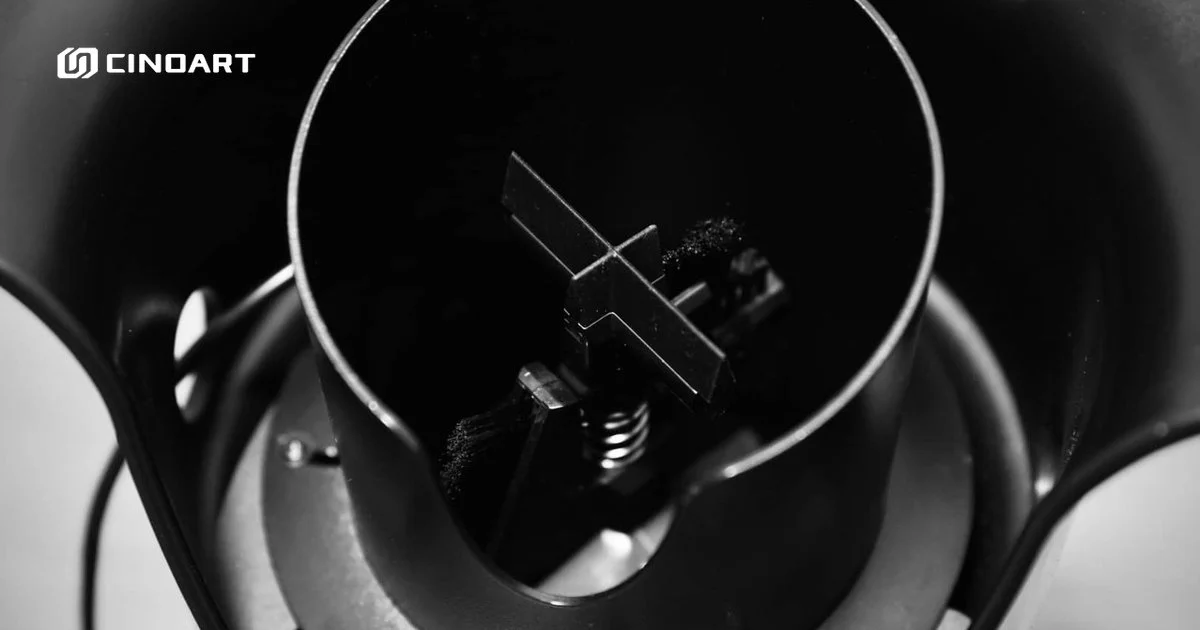
CINOART PC is designed around a motor-driven brush and about five seconds of contact per cleaning cycle. The automatic portafilter cleaner page explains the basket range and installation options. It is a workflow tool, not a replacement for detergent soaking or backflushing.
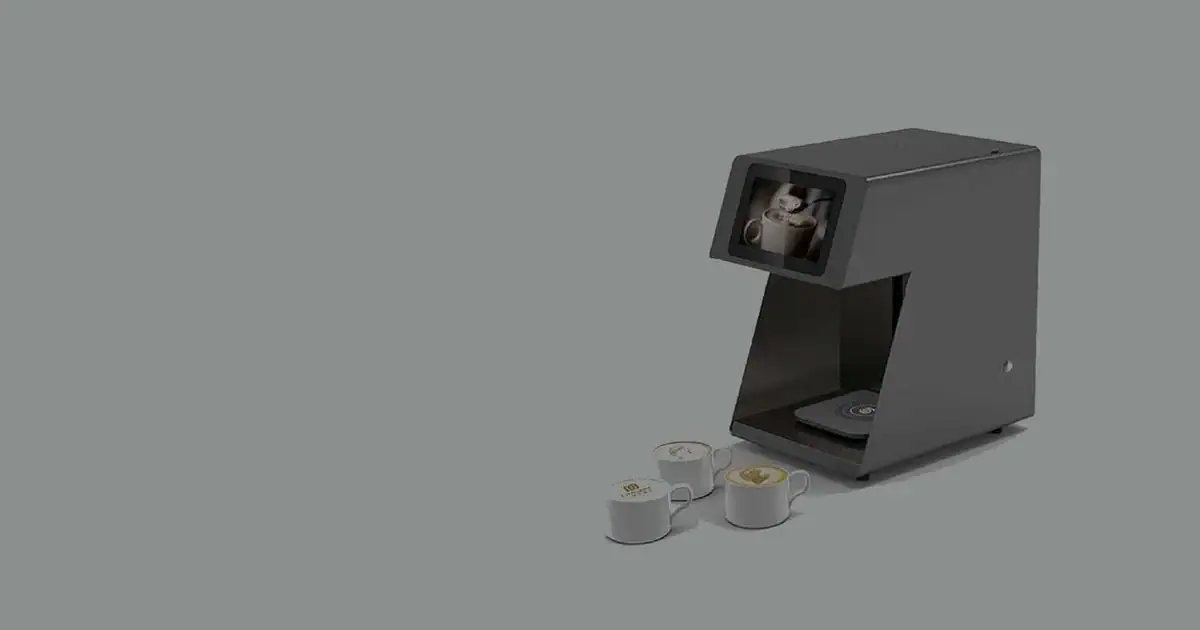
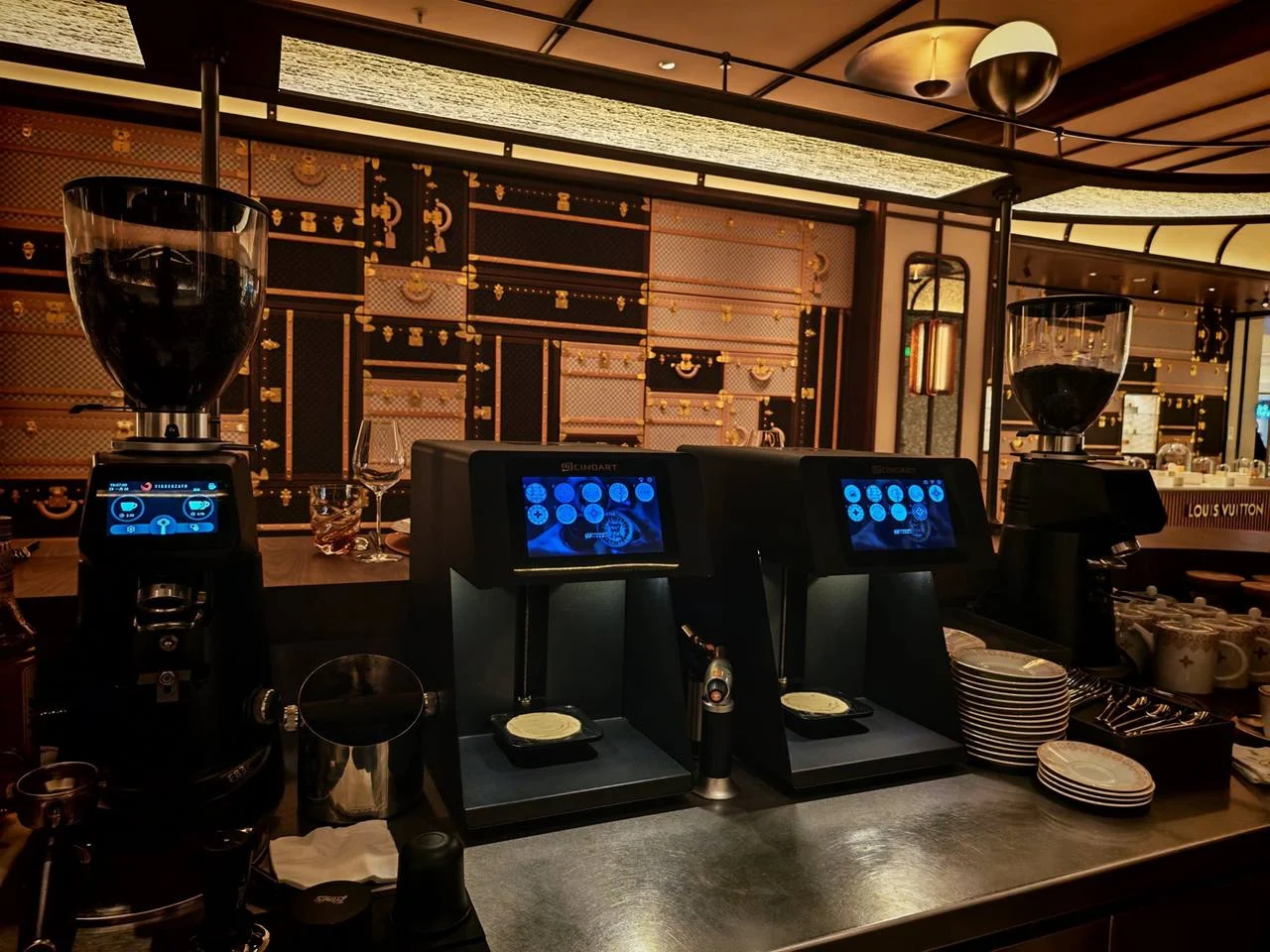
A coffee printer belongs to a different part of the business. It can add branded or personalised designs to suitable flat foam or food surfaces, but it doesn’t make espresso or create the foam. If that is part of your menu or activation plan, compare the commercial coffee printer with the space, cup sizes, image workflow and consumables you will actually use.
What we see in commercial coffee workflows
We see three buying decisions getting mixed together: the machine that extracts espresso, the equipment that keeps the bar moving and the equipment that creates a customer-facing experience. Separating those jobs makes the quote easier to judge.
- Extraction: Choose the espresso machine, grinder, water and power around the menu and peak service.
- Repetition: Add a tool only when a repeated manual action is slowing the team or becoming inconsistent.
- Experience: Add printing or branding equipment only when customers, hotel guests or event visitors have a real reason to use it.
CINOART was founded in Shenzhen in 2016 and has documented 33 patents across its product lines. Named project references include the Lavazza China flagship store, Guinness and Budweiser projects. Those references show commercial use cases, not a promise that one machine or one workflow fits every bar.
The practical test is simple: draw the bar, time the busiest workflow, measure the available utilities and ask who fixes the machine when it stops. If the quote answers those questions, it is becoming a purchase plan. If it only lists chrome, boiler litres and a discount, it is still an incomplete purchasing plan.
Commercial coffee machines FAQ
What is the best commercial coffee machine for a small cafe?
The best machine is the one that fits the cafe’s menu, peak demand, counter, utilities and local service network. A small cafe may need a compact commercial machine or a two-group machine, but group count alone can’t decide the purchase.
How many groups does a cafe espresso machine need?
Many cafes start by comparing one-group and two-group machines, then choose based on simultaneous espresso and milk demand. Count the busiest 15-minute period, the number of baristas and the grinder workflow before choosing a group count.
Are commercial coffee machines plumbed in?
Many commercial espresso machines use a direct water connection and drain, while some compact models use a reservoir or a different setup. Confirm the exact machine’s inlet, pressure, flow, drain and installation requirements before ordering.
How much does a commercial coffee machine cost?
Public United States retail examples for two-group machines checked for this guide ranged from about $8,000 to more than $23,000 before freight, installation, filtration, taxes and site work. The exact price depends on the model, configuration, region and service package.
Is a super-automatic machine suitable for a coffee shop?
It can be suitable when the menu, staffing model and cleaning process fit the machine. Compare recipe control, milk handling, cleaning cycles, service support and the drinks your customers actually order instead of assuming automation solves every bar problem.
Should I buy a commercial coffee machine new or refurbished?
Either can work when the machine’s condition, service records, warranty, parts supply, water history and local technician support are clear. Have a qualified technician inspect a refurbished machine before you rely on it for daily service.
Choose the machine around the bar, not the brochure
Write down the menu, busiest 15-minute demand, staff positions, water test, electrical supply, drain plan and service contact before comparing final quotes. If you are also evaluating an automatic tamper, portafilter cleaner or coffee printer, send CINOART your basket size and target market so we can check the fit without pretending one machine does every job.