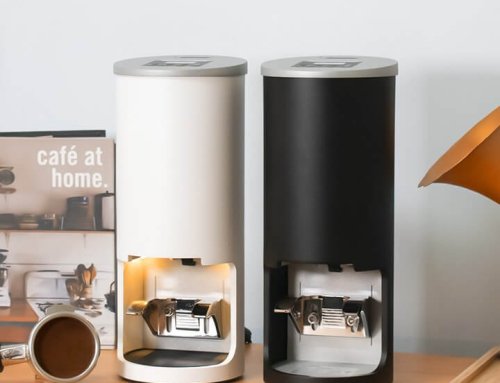
Quick answer: Automatic tampers are worth it for busy cafés, multi-barista teams, and anyone who needs the same tamping process repeated through a rush. They’re usually not worth the cost for a low-volume home setup. The main benefit is repeatability, not a magic pressure number. A machine removes one human variable. It doesn’t replace the grind. It doesn’t replace distribution or extraction.
Proof line: CINOART has built automatic tampers since 2018 and has 33 patents across its coffee equipment work. The PT2 is a real commercial machine with preset pressures, segmented tamping, and support for several portafilter types. See the CINOART automatic tamper range.

Automatic tamper or manual tamper: which one is worth buying?
The short version is simple. Buy an automatic tamper when consistency, speed, and staff-to-staff repeatability are worth more to your bar than the purchase price. Keep a manual tamper when the bar makes fewer drinks, one person does most of the work, or the machine would spend more time looking handsome than working.
- Home bar making a few shots a day: Manual tamper. Lower cost and enough control for the volume.
- Small café with one regular barista: It depends. Buy automation only if repeatability is already a problem.
- Busy café with several baristas: Automatic tamper. One repeatable tamping process across shifts.
- Coffee chain or training bar: Automatic tamper. The workflow is easier to standardize.
- Barista with hand or wrist strain: Automatic tamper. It removes repeated downward tamping from the routine.
- Café still changing grind and distribution every hour: Fix the workflow first. Automation can’t rescue unstable inputs.
The machine isn’t the hero in this list. The workflow is. The machine just stops one small part of the workflow from changing every time a new person steps behind the bar.
| Your setup | Better choice | Why |
|---|---|---|
| Home bar making a few shots a day | Manual tamper | Lower cost and enough control for the volume |
| Small café with one regular barista | Depends | Buy automation only if repeatability is already a problem |
| Busy café with several baristas | Automatic tamper | One repeatable tamping process across shifts |
| Coffee chain or training bar | Automatic tamper | The workflow is easier to standardize |
| Barista with hand or wrist strain | Automatic tamper | It removes repeated downward tamping from the routine |
| Café still changing grind and distribution every hour | Fix the workflow first | Automation can’t rescue unstable inputs |
What does an automatic tamper actually do?
An automatic tamper applies a repeatable pressure and tamping sequence to a prepared coffee puck before extraction. The barista doses the portafilter, distributes the grounds, places it in the support, selects a pressure profile, and lets the machine complete the tamping cycle.
That means an automatic tamper can control the tamping step. It can’t control the dose, grind size, distribution, water temperature, brew ratio, or the mood of the grinder, which always seems to develop one during the morning rush.
The CINOART PT2 supports single-spout, double-spout, and bottomless portafilters. Its guide lists three preset pressure labels at 10 kg, 20 kg, and 30 kg, with a working pressure range of about 2 kg to 38 kg. The café can choose a single stage, then add stages when the recipe needs more control. That gives the team room to test the sequence without changing the rest of the recipe. See the PT2 product details.
Do automatic tampers improve espresso?
Automatic tampers can improve espresso consistency when manual tamping varies between people or between shots. They don’t automatically make every espresso better, because tamping is only one part of the puck preparation process.
A peer-reviewed study in Matter used an automated PuqPress set to 98 N to standardize tamping during espresso experiments. The machine helped the researchers keep preparation consistent, but the study found that the tested tamping pressures didn’t create a dramatic change in extraction yield or shot time. Read the study.
That’s the useful distinction. An automatic tamper isn’t a tiny espresso wizard. It’s a repeatability tool. If the coffee dose and distribution change, the machine will repeat the wrong starting point with impressive confidence.
The best result comes when the bar fixes the whole sequence: dose, distribute, tamp, extract, taste, and adjust. The automatic tamper makes the tamp step easier to repeat while the team works on the rest.

Are coffee tampers necessary for every café?
No. Coffee tampers are necessary for preparing a traditional espresso puck, but automatic tampers aren’t necessary for every café.
A manual tamper can do the job well when the barista has a stable technique and the café has a small, consistent team. A calibrated manual tamper can also help keep pressure more repeatable without adding a motor, a control panel, and another piece of equipment to wipe down at the end of the day.
An automatic tamper becomes more useful when the same café has several of these problems:
- Different baristas create visibly different puck surfaces.
- New staff need a shorter training path.
- The bar runs continuously during peak service.
- The café wants the same tamping settings across shifts.
- Repeated manual tamping is tiring or uncomfortable.
- The owner wants fewer technique variables while dialing in coffee.
If none of those problems exists, the machine may be a very expensive way to make the same puck you already make. It will look excellent in a product photo, though. Product photography has saved many purchases from honest self-reflection.
When are automatic tampers worth the cost?
Automatic tampers are most worth the cost when the machine solves a repeated operating problem. The value isn’t just the number of seconds saved on one tamp. It’s the number of small differences removed across a full day of service.
Busy cafés need repeatability more than another speed claim
A café with one barista making 30 drinks a day has a different problem from a café with four people rotating through a busy bar. The second café has more hand positions, more training levels, and more chances for the puck preparation to change.
That’s where automation earns its place. A shared pressure profile gives the team a common starting point. It also gives the owner something concrete to teach: place the prepared portafilter, choose the pressure, and run the cycle.
The machine doesn’t make the team identical. It gives the team one less thing to improvise.
Multi-barista teams can standardize the handoff
A café can write down a tamping setting. It’s harder to make every person apply that setting the same way at 8:00 a.m., 11:30 a.m., and five minutes before closing when everyone is thinking about food.
An automatic tamper makes the written process physical. The setting is on the machine, not hiding in the memory of the most experienced barista.
That matters for cafés training new staff, chains managing several locations, and distributors supplying equipment to customers who want a repeatable workflow rather than another loose tool in a drawer.
Hand and wrist strain can change the calculation
Repetitive tamping is a small motion repeated many times. Small motions become less small when a busy bar repeats them for hours.
Research on push tampers has focused on reducing force and awkward wrist movement in espresso preparation. Read the Sprudge report on the injury-risk research.
That doesn’t turn an automatic tamper into medical treatment. It means ergonomics can be part of the business case. If the machine helps keep a trained barista working comfortably, the value isn’t only in the puck.
What are the disadvantages of an automatic tamper?
The main disadvantages are cost and counter space. Maintenance matters too. So do compatibility and false confidence.
- Purchase cost: The machine must save time, strain, or inconsistency that matters to your business.
- Counter space: A commercial bar has to fit one more device into an already crowded workflow.
- Compatibility: The portafilter and basket size must match the machine’s support and disk.
- Cleaning: Coffee grounds still get everywhere, now with a control panel nearby.
- Training: Staff still need to dose, distribute, and extract correctly.
- False confidence: A repeatable bad input is still a bad input.
Compatibility deserves special attention. The PT2 guide lists approximately 58 to 58.3 mm tamping disk compatibility, including VST sizes. It also says the support needs adjustment for different portafilters. Confirm your basket size and portafilter style before you buy. Check the PT2 operating information.
| Check before buying | Why it matters |
|---|---|
| Basket size | The disk and basket need to match |
| Portafilter style | The support needs the right adjustment |
| Grinder workflow | A mounted model may fit better than a separate station |
| Bar space | The machine must fit the working counter |
If that exact operating page changes, use the CINOART PT2 product page as the current product reference.
What does an automatic tamper not replace?
An automatic tamper doesn’t replace grinding, dosing, distribution, extraction, cleaning, or barista judgment.
The barista still needs to:
- Grind the coffee correctly.
- Dose the right amount into the portafilter.
- Distribute the grounds evenly.
- Select a suitable tamping profile.
- Lock in the portafilter and extract the shot.
- Taste the result and adjust the recipe.
The PT2 can apply a single tamping stage. It can also run additional stages when the recipe calls for them. That gives the team more control over the tamping sequence, but it doesn’t decide whether the grind is too fine or the coffee tastes over-extracted. The machine isn’t tasting the espresso. It’s busy being a machine.
For a café, that boundary is useful. You can use automation for the repeatable action and keep the trained human decision where it belongs.

What we see in the field: the decision should start with the workflow
CINOART’s automatic tamper range includes PT1, PT2, PTB-MY, and PTB-FI. PT1 and PT2 are standalone machines. PTB-MY is designed for Mythos and Anfim grinder workflows. PTB-FI is designed for Fiorenzato workflows.
That range shows why the buying question isn’t simply, “Is an automatic tamper better?” The useful question is, “Where does tamping happen in this bar, and what keeps changing?”
A standalone PT2 may suit a café that wants a separate tamping station with saved pressure settings. A grinder-mounted PTB model may suit a bar that wants the tamping step kept close to the grinder. The right choice depends on the bar layout, portafilter, grinder, staff, and service volume.
CINOART’s typical factory-direct price band for automatic tampers is $500 to $1,000. That’s a working range, not a fixed public price. The final quote depends on the product, configuration, quantity, and destination. Request a product quote from CINOART.
How should a café decide?
Use this five-question test before you buy:
- How many espresso doses pass through the bar each day? More volume gives repeatability more chances to matter.
- How many people tamp during a normal week? More hands usually mean more variation.
- Do you already have a stable grind and distribution process? If not, fix those first.
- Does the team struggle with wrist fatigue or training time? If yes, include that value in the decision.
- Does the equipment fit your portafilter and bar layout? If not, the best machine on paper is the wrong machine for your bar.
If you answer yes to three or more of the last four questions, an automatic tamper is worth a serious quote. If you answer no to nearly all of them, a good manual tamper is probably the better buy for now.
Frequently Asked Questions
Do automatic tampers work?
Yes. Automatic tampers work by applying a repeatable tamping pressure and sequence to a prepared portafilter. Their value is consistency and workflow control. They don’t fix an incorrect dose, uneven distribution, poor grind, or extraction problem.
Are automatic tampers worth it for home use?
Usually not if you make only a few shots a day and have a comfortable manual technique. They can be worth considering for a home barista with hand or wrist limitations, a high-volume home setup, or a strong preference for automation. The lower the volume, the harder it is to justify the purchase on time saved.
What pressure should an automatic tamper use?
There is no universal pressure number that makes every espresso correct. The right setting depends on the coffee, basket, dose, distribution, and recipe. The CINOART PT2 lists preset labels of 10 kg, 20 kg, and 30 kg and a working range of about 2 kg to 38 kg, so the setting can be tested against the café’s recipe rather than guessed.
Does an automatic tamper replace a barista?
No. It automates the tamping step. A barista still controls grinding, dosing, distribution, extraction, tasting, cleaning, and service decisions. The machine removes one repeatable action. It doesn’t remove the need for coffee knowledge.
Are coffee tampers necessary?
A tamper is necessary for a traditional espresso workflow because the coffee grounds need to be prepared into a puck before extraction. An automatic tamper is optional. A manual tamper can be the right choice for a low-volume bar with stable technique.
Which CINOART automatic tamper should a café choose?
PT1 and PT2 are standalone options. PTB-MY is designed for Mythos and Anfim grinder workflows, while PTB-FI is designed for Fiorenzato workflows. Confirm the grinder, portafilter, basket size, bar layout, quantity, and destination before requesting a quote.
The honest answer
Are automatic tampers worth it? For a busy café, multi-barista team, or operator dealing with repeated manual strain, they can be. For a low-volume setup with one confident barista, a manual tamper may still be the smarter use of the budget.
The machine’s job isn’t to make every espresso brilliant. Its job is to make the tamping step repeatable, then get out of the way. If that is the problem your bar actually has, compare CINOART automatic tampers for commercial espresso workflows. If the bigger problem is choosing the right machine for your grinder setup, start with the CINOART coffee equipment range.
Author
Sean Wang is the founder of CINOART, a coffee device manufacturer based in China. CINOART was founded in 2016 and develops automatic tampers, coffee printers, and portafilter cleaners for commercial coffee businesses. Learn more about CINOART.
Sources
- CINOART automatic tampers
- CINOART PT2 product page
- CINOART PT2 operating guide
- CINOART automatic vs manual tamper guide
- Systematically Improving Espresso, Matter
- Seven Miles tamping pressure test
- Sprudge report on push tampers and injury risk
- Home Espresso HQ automatic tamper guide
- PUQPress review and commercial use discussion